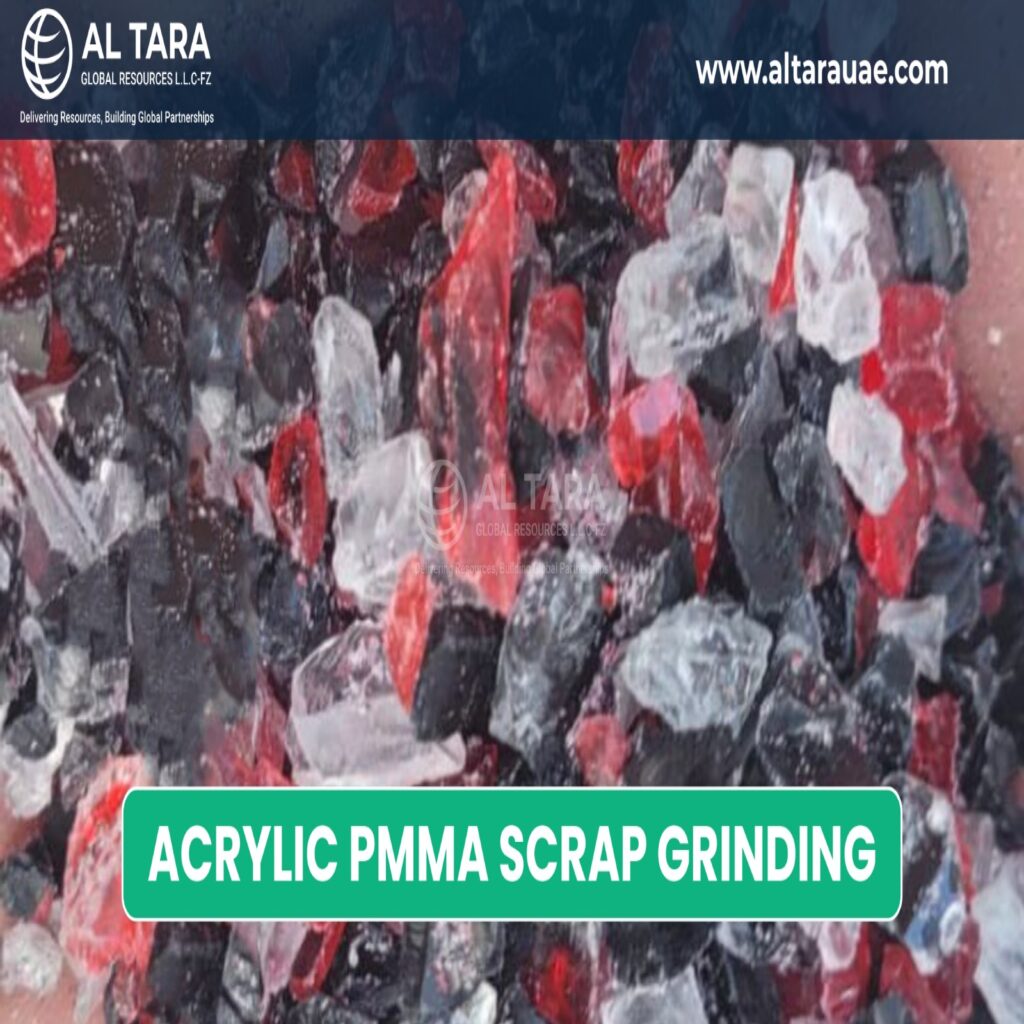
Acrylic PMMA regrind is becoming more important in the UAE as industries grow in Dubai and Sharjah. As production increases, plastic waste also rises. Therefore, companies now focus on recycling and plastic regrind solutions to reduce waste and save costs.
First, businesses collect and sort acrylic scrap by color and quality. Then, they clean and grind the material into small pieces. This process creates plastic regrind that manufacturers can reuse in many products. For example, factories use acrylic PMMA regrind to produce signage boards, display stands, protective panels, and construction sheets. As a result, companies reduce raw material expenses and improve efficiency.
In addition, many recyclers use scrap pelletising to improve material quality. During scrap pelletising, machines melt the ground acrylic and form small, uniform pellets. These pellets are easier to handle, store, and transport. Moreover, pelletising ensures consistent material performance in new production cycles.
There are two main recycling methods used in the UAE: mechanical recycling and chemical recycling. Mechanical recycling involves grinding and reprocessing scrap into reusable regrind. On the other hand, chemical recycling breaks PMMA down into its original monomer to create new acrylic sheets. Although chemical recycling requires advanced technology, it produces high-quality results.
In Dubai and Sharjah, strong recycling networks support steady material supply. Suppliers collect acrylic scrap from factories and fabrication units across the UAE. Consequently, manufacturers can access reliable acrylic PMMA regrind throughout the year.
Overall, recycling acrylic PMMA regrind helps businesses lower costs, reduce landfill waste, and support sustainability goals. As recycling awareness grows in the UAE, plastic regrind and scrap pelletising continue to play a key role in building a circular economy.
Conclusion
In conclusion, acrylic PMMA regrind offers a cost-effective and sustainable solution for manufacturers in the UAE. With reliable recycling, plastic regrind, and scrap pelletising, businesses improve efficiency while supporting a circular economy.
FAQs
1. What is acrylic PMMA regrind?
First, it is recycled acrylic material processed into reusable plastic regrind for manufacturing.
2. What is scrap pelletising?
Next, scrap pelletising converts ground acrylic into uniform pellets for easier handling and consistent processing.
3. What is the difference between mechanical and chemical recycling?
In comparison, mechanical recycling grinds and reuses PMMA, while chemical recycling converts it back into its original monomer.
4. Where is acrylic PMMA regrind used?
For example, manufacturers use it in signage, display stands, protective panels, construction sheets, and other plastic products.
5. Why do companies in the UAE choose acrylic PMMA regrind?
As a result, they reduce raw material costs, minimize plastic waste, and support sustainable manufacturing.