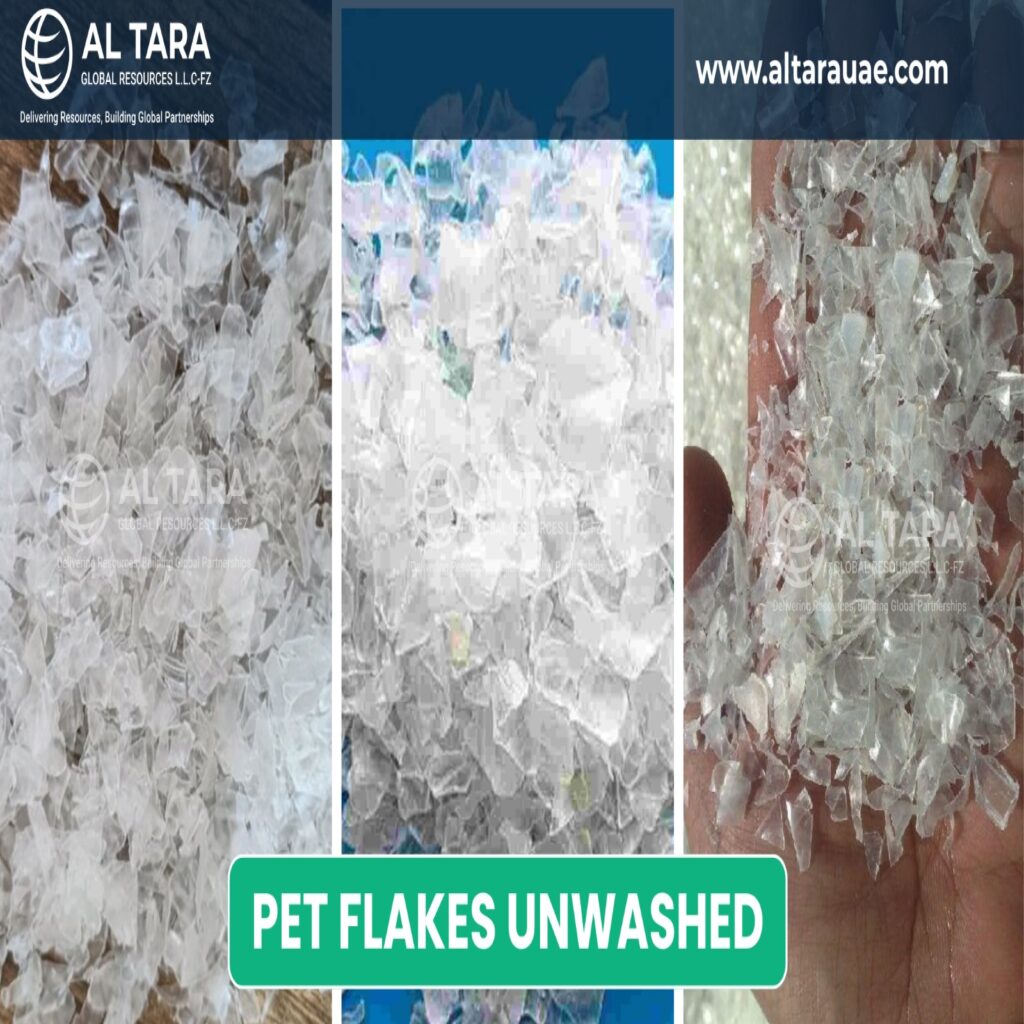
PET flakes unwashed scrap is an important material in the recycling industry. Many factories and recycling units collect PET bottle scrap every day. However, before washing and processing, recyclers first handle unwashed PET flakes. This material plays a key role in plastic recycling.
First, suppliers collect PET scrap from waste collection centers and industrial sources. Then, they sort the material to remove metal, labels, and other impurities. After sorting, machines shred the PET scrap into flakes. At this stage, the flakes remain unwashed. Therefore, they still contain minor dirt, glue, or residue.
Many recycling companies buy PET flakes unwashed scrap because it offers cost advantages. Since the material is not fully processed, the price is lower than washed flakes. As a result, buyers can wash and process the flakes based on their own quality standards. This gives manufacturers better control over production.
Moreover, unwashed PET flakes support flexible recycling operations. Companies can clean, dry, and reprocess the scrap into recycled PET pellets. These pellets are later used in packaging, textile fiber, and plastic sheet production. In addition, recycling PET scrap reduces landfill waste and supports environmental goals.
In the UAE, demand for PET flakes unwashed scrap is increasing. Recycling businesses focus on steady supply and consistent quality. Consequently, suppliers improve sorting systems and storage methods to meet market needs.
In conclusion, PET flakes unwashed scrap offers economic and environmental benefits. It lowers raw material costs. It also supports sustainable plastic recycling. As recycling awareness grows, demand for PET scrap solutions will continue to rise.