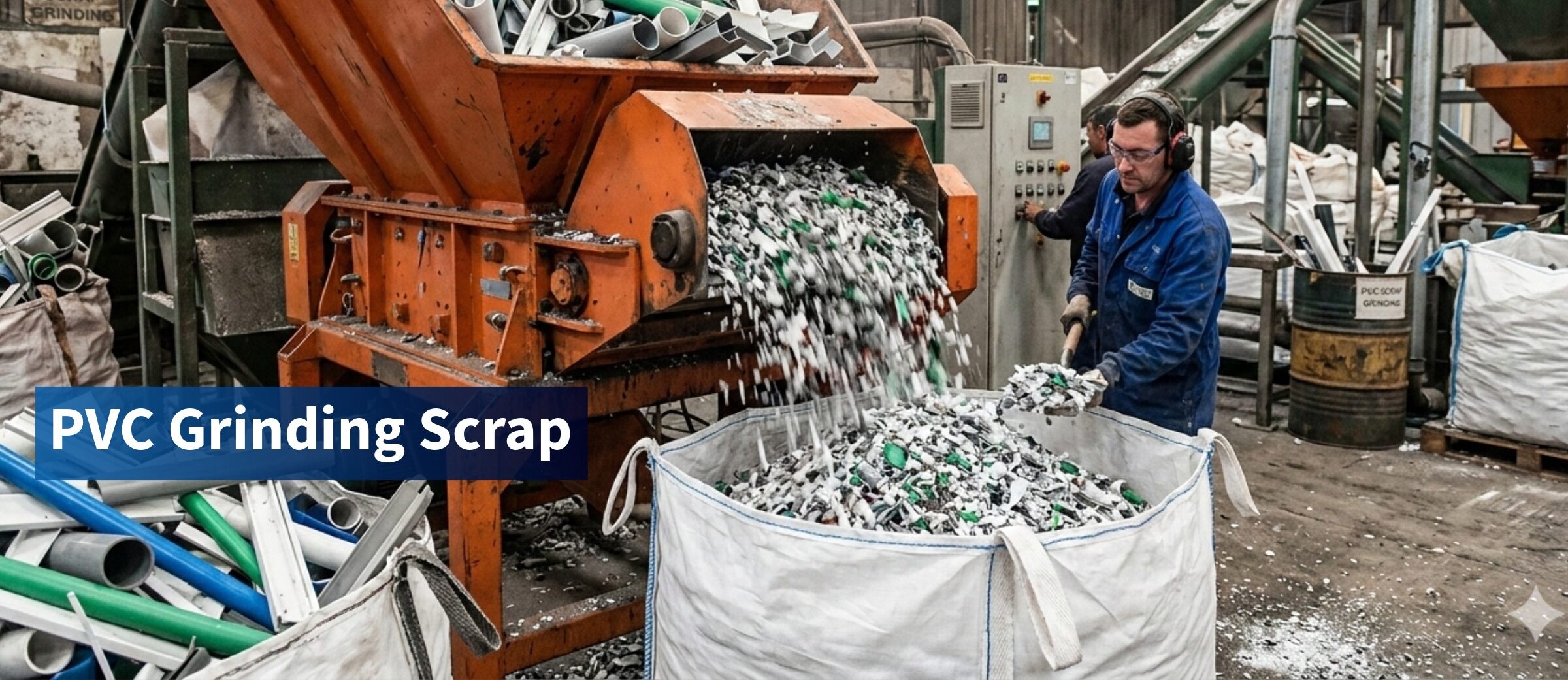
PVC Scrap / PVC stands for polyvinyl chloride. It is a very common type of plastic used all over the world. In fact, it is the third most popular plastic, right after polyethylene and polypropylene. Every year, factories around the globe make between 40 and 57 million tonnes of it.
Generally, you will find PVC in two main forms:
- Rigid PVC: This type is hard, stiff, and very strong.
- Flexible PVC: This version is soft, stretchy, and easy to bend.
Manufacturers also look at the Melt Flow Index (MFI). This number tells them how fast the plastic melts. For making parts in molds, the MFI is usually between 10 and 25. Because of this, it is easy for machines to shape the plastic into many different products.
Why Do Industries Use PVC Scrap?
Companies love PVC because it lasts a long time. It is lightweight, tough, and does not rust. Specifically, different industries use it for different needs:
- Construction: They use rigid PVC for water pipes, window frames, and doors.
- Electronics and Health: They use flexible PVC for wire covers, medical tubes, and car parts.
Additionally, PVC is cheaper than metal, wood, or glass. Since it lasts so long and is easy to set up, it works well in almost any weather. Consequently, it has become a staple in modern life.
The Benefits of PVC
PVC has many clear perks compared to older materials:
- No Rust: It resists corrosion, so it stays in good shape without much work.
- Safety: It does not burn easily and blocks electricity well.
- Low Cost: It is cheap to buy but lasts for decades.
Therefore, even with new “green” plastics on the market, many builders still pick PVC. Furthermore, its long-term value makes it a smart choice for big projects.