High Impact Polystyrene: Powerful Scrap Secrets
High Impact Polystyrene (HIPS) is a tough version of standard plastic. Manufacturers create this material by adding rubber to the mix. Consequently, the plastic becomes much stronger. This durability makes it perfect for toys, car parts, and fridge liners. Therefore, many factories prefer it for hard-shell cases.
Why Industries Choose High Impact Polystyrene
There are several reasons why HIPS is a top choice. First, it is very easy to mold into complex shapes. Second, it is much cheaper than other high-strength plastics. However, it does have some downsides. For instance, it becomes brittle if left in the sun for too long. Furthermore, it can catch fire easily unless treated with special chemicals. Because of this, it is mostly used for indoor products.
Technical Data: Melting and Boiling
Technically, HIPS does not have a single “boiling point.” Instead, it softens as it gets hotter. It reaches a glass transition state at 100°C. Then, it fully melts for processing between 180°C and 250°C. Specifically, knowing these numbers is vital for recycling plants. It helps them avoid burning the material during the melting process.
Global and UAE Market Trends
HIPS is used all over the world. Currently, China is the biggest consumer. This is because they manufacture the most electronics. In addition, the United States and Germany use large amounts for food packaging.
In the UAE, the scrap market is growing fast. Most HIPS scrap comes from local assembly lines for printers and appliances. Actually, the UAE is pushing to recycle more plastic every year. The country generates about 1.5 million tonnes of plastic waste annually. While the historical recycling rate was low, new laws aim to divert 75% of waste from landfills by 2030. Thus, the demand for HIPS scrap is rising.
Where Does the Scrap Come From?
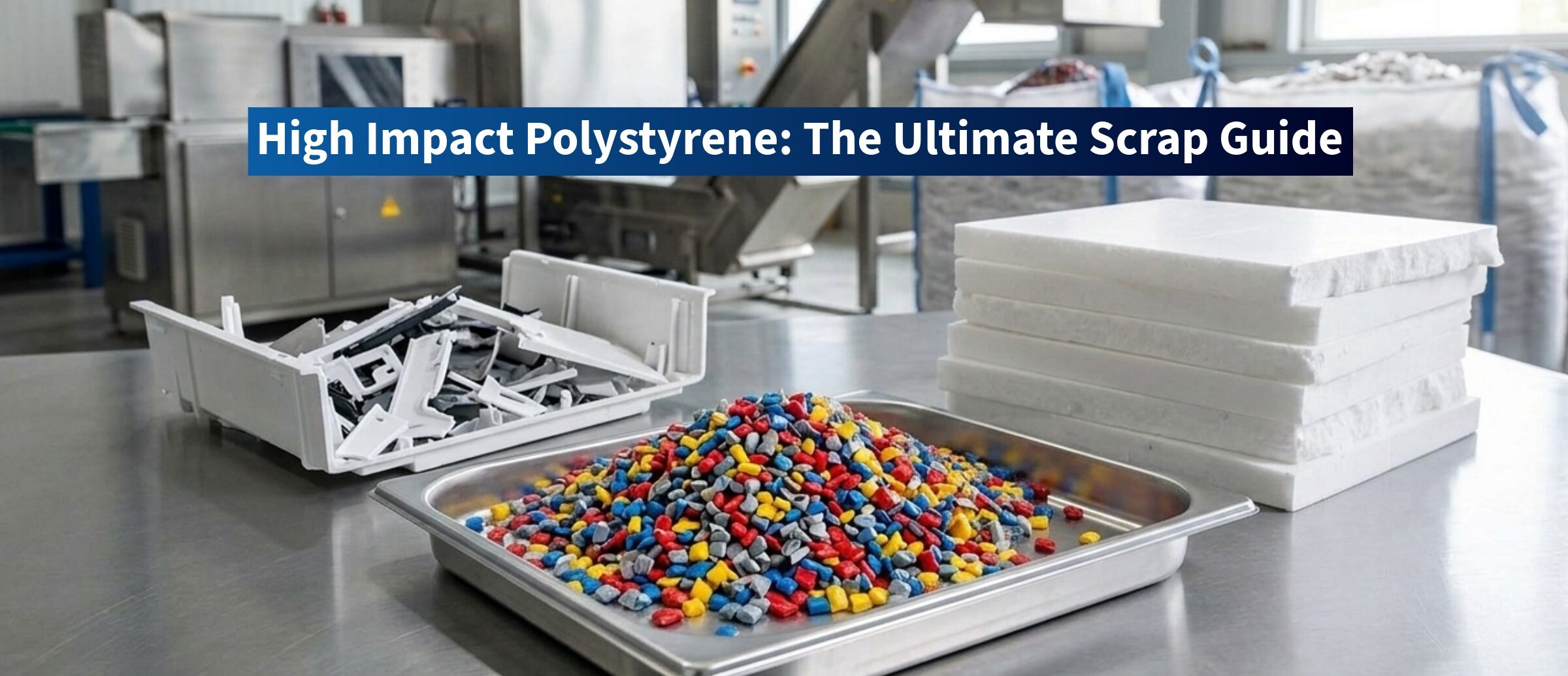
Most HIPS scrap is sourced from industrial “off-cuts.” Specifically, these are the leftover pieces from vacuum forming or injection molding. Moreover, old electronics like computer monitors and TV casings provide a steady supply. Finally, recycling centers collect these parts to create high-quality HIPS “regrind“.