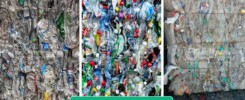
Blue HDPE drums are one of the most recognizable plastic scrap items in the Gulf, and one of the grades that shows up in local UAE searches: HDPE scrap in Dubai, HDPE scrap suppliers in the UAE, and specifically HDPE blue drum scrap. Jerry cans and similar rigid hollow ware sit in the same family.
The polymer is usually straightforward. The risk sits in what the drum used to hold. This article explains how used HDPE drums are identified and sold, why residues can take a lot out of the ordinary scrap trade, and the forms buyers typically want (whole, cut or regrind). It is general information, not legal advice, and it does not invent prices. For market context, see plastic scrap prices in the UAE.
What HDPE drum scrap is
HDPE is high-density polyethylene, resin identification code #2 [1]. Drums, many jerrycan cans, much chemical and detergent packaging, and the bottle of many IBC units are typically HDPE — but check, because polypropylene is common in buckets, pails and some caps, and the two polymers look alike. Our guide to identifying HDPE and PP scrap covers practical tests. Closely related is HDPE IBC tank scrap.
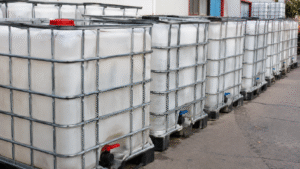
Empty IBC tanks, a related HDPE packaging stream often sold alongside drums. Labels and UN marks are part of what buyers inspect.
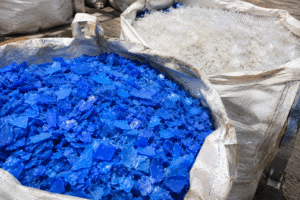
“Drum scrap” usually means used rigid HDPE packaging sold as whole empties, cut pieces or regrind. Colour matters: blue is a familiar regional lot; natural, white, yellow, black and mixed-colour lots have different buyer pools. A mixed-colour grind is not the same product as a clean blue regrind.
HDPE is widely recyclable when it is the right polymer, reasonably clean, and not carrying a hazardous residue. The first question is not “can HDPE be recycled?” but what was in it, and is that residue still there?
Why residues matter more than colour
An empty drum is not necessarily a clean drum. A film of solvent, oil, resin, acid or pesticide can classify the packaging as contaminated, create a safety risk, and close off ordinary recycling and export routes.
Dubai Municipality’s waste-plastic trading guidelines are explicit: plastic wastes contaminated with hazardous substances, such as pesticides, should not be accepted. Agricultural packaging is flagged because of pesticides. The same guidelines recommend sorting by type, visual inspection, and at least one representative sample per batch, including purity and melt flow index . A responsible seller should be able to say what the containers previously held, how they were emptied, and whether they were rinsed. Unknown previous contents are a problem; many buyers will refuse a lot with no history.
Official rules that affect used drums
Several official documents are relevant. They were written for slightly different purposes, so check the current text — and take advice where needed — before you move, shred or export drums that held chemicals.
Hazardous-waste disposal in Dubai. Technical Guideline No. 8 (revised 6 November 2025) classifies contaminated empty chemical containers as W4.1 and empty pesticide containers as W4.6. Its fee table lists AED 400 per tonne for empty chemical containers . Section 5.5.7 instructs that empty tin cans must be pressed or flattened at the generator’s site before collection; that paragraph does not spell out an equivalent cutting rule for HDPE drums. Do not assume a plastic drum with hazardous residue can enter the ordinary scrap trade simply because it is “empty”.
Federal and transboundary rules. Cabinet Resolution No. (116) of 2023 applies to establishments that recycle, import or export listed recyclable materials, including HDPE, in free zones as well as on the mainland. For export of non-hazardous recyclable materials, Article (7) requires separation by type, cleaning and cutting in the UAE to Table No. (3) (for plastic solid waste: conversion into granules or flakes), laboratory confirmation on contaminants and hazardous properties, and an official letter from the importing state’s competent authority [4]. If the material exhibits listed hazardous properties, the Basel Convention applies [4]. Clean single-polymer polyethylene and a contaminated shipment can fall under different Basel listings; see our HS 3915 and Basel guide [5]. HDPE scrap is commonly classified under 3915.10, subject to confirmation for the actual form.
Buying, selling or exporting waste plastic as a business is a licensed activity. See trading licences and export permits. A rinsed, cut food-grade drum is a different object from a pesticide drum with residue in the bottom.
Whole, cut or regrind: the forms buyers see
Form changes both logistics and who can buy the material [6]:
-
- Whole drums can trap liquid and are harder to inspect in a stack. Some buyers will take cleaned whole drums; others will not. “Whole and unrinsed” is the highest-risk form if the contents were hazardous.
-
- Cut or sawn drums can be inspected inside and are a practical step before grinding.
-
- Regrind or flakes are typically what an industrial buyer wants — but only if the feedstock was suitable to grind. Grinding does not remove contamination; it can spread it through the lot.
-
- Washed regrind or granules are a tighter specification, often including colour and melt flow.
Cabinet Resolution 116/2023’s export table refers to conversion into granules or flakes [4]. Whether a particular whole or cut shipment can be exported is a question for the authorities and your customs broker.
How buyers assess a lot
A serious buyer will usually want polymer confirmation, colour, previous contents (and any cleaning record), form and packing, visible contamination, and photos of the actual lot — including opened drums or an opened bag of regrind — plus a sample for larger deals. For first loads, a third-party inspection is often worth considering. Contract and payment terms should follow the same discipline as any other scrap purchase; see our supplier checklist.
Prices follow quality. Clean, colour-sorted, residue-free regrind is a different product from mixed, wet or chemical-service drums. Use the UAE price guide for context, then quote against the actual specification. Keep food-grade or non-hazardous streams separate from chemical-service drums from the start; mixing them devalues both.
How ALTARA works with HDPE
AL TARA GLOBAL RESOURCES L.L.C-FZ is a Dubai (Meydan Free Zone) trader of plastic scrap, regrind and off-grade granules, sourcing from UAE recyclers and suppliers. The group also has operations in India, Hong Kong and Hungary. We are not a hazardous-waste contractor or a drum-reconditioning plant. Describe previous contents honestly; contaminated streams need the proper waste route, not a scrap quotation.
To discuss a commercial HDPE drum, jerrycan-can or regrind lot, contact us with photos, form, colour, quantity and previous contents. See also our plastic range and HDPE IBC tank scrap.
Frequently asked questions
Can used HDPE drums be recycled? Yes, when they are HDPE, reasonably clean, and not carrying a hazardous residue [2][3]. Residues, mixed polymers and water all reduce, and can eliminate, that option.
Do drums have to be cut or ground before sale? Not always for a domestic sale; that depends on the buyer. For export under Cabinet Resolution 116/2023, Table No. (3) refers to conversion into granules or flakes [4]. Confirm this for your shipment.
What about blue drum scrap specifically? Blue is a commonly offered colour lot in the UAE. Colour helps, but it does not override residue, moisture or mixed-polymer problems.
Who buys HDPE drum scrap in the UAE? Licensed recyclers and traders. See buyers by emirate. Public recycling centres are not the right outlet for chemical drums.
Is this legal advice? No. Classification of a particular container, and any permit to transport, treat or export it, must be confirmed with the competent authority.
Related reading
See where to sell plastic scrap for household versus commercial channels, regrind versus flakes and granules for forms, and trading licences and export permits for the compliance path. To talk about a lot, email cs@altarauae.com, WhatsApp +971 55 937 5839, or use the contact form.
General information only, not legal advice. Always check the current official guidelines and the facts of your own material.