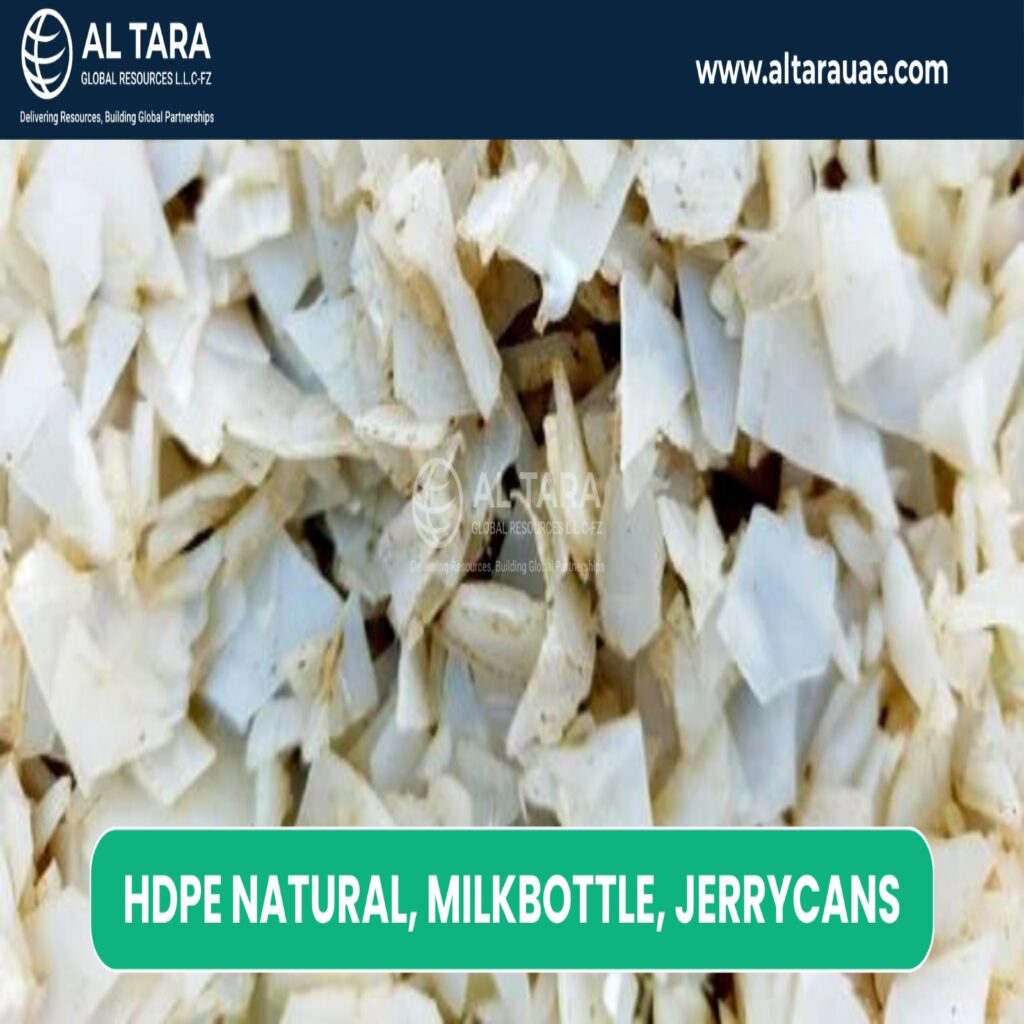
The demand for HDPE natural scrap in UAE is increasing every year. Additionally many industries in Dubai and Sharjah now focus on plastic recycling. This shift helps reduce waste and supports sustainable manufacturing.
HDPE (High-Density Polyethylene) is a strong and durable plastic. Therefore, manufacturers widely use it to produce milk bottles and jerrycans. After use, recycling companies collect these materials and then process them into valuable scrap. As a result, the recycled material becomes a valuable resource for new manufacturing.
Firstly, scrap buyers in the UAE collect post-consumer and post industrial scrap from factories, warehouses, and commercial facilities. Then, recyclers sort the plastic carefully. This process removes contaminants and separates natural HDPE from colored plastics.
Next, recyclers wash and grind the plastic into HDPE regrind flakes. Manufacturers reuse these flakes to produce new plastic products. For example, they use recycled HDPE in containers, pipes, crates, and packaging materials.
Moreover, the HDPE natural scrap price in UAE depends on several factors. Quality, cleanliness, and supply levels influence the market price. In addition, demand from recycling factories in Dubai and Sharjah plays a major role.
Today, many businesses prefer recycled materials. They want to reduce production costs and meet sustainability goals. Therefore, the demand for HDPE milk bottle and jerrycan scrap continues to grow across the UAE recycling market.
Furthermore, recycling natural HDPE scrap saves energy and reduces landfill waste. It also supports the circular economy in the region.
Conclusion
In conclusion, HDPE natural scrap recycling in the UAE offers both environmental and economic benefits. Moreover, with active scrap buyers and recycling companies, milk bottles and jerrycans become valuable raw materials again.
FAQs
1. What is HDPE natural scrap?
Recyclers collect it from used milk bottles and jerrycans.
2. How do recyclers process HDPE natural scrap?
They sort, wash, and grind it into reusable flakes.
3. What affects the HDPE natural scrap price in the UAE?
Quality, cleanliness, supply, and demand affect the price.
4. What do manufacturers make from recycled HDPE?
They make pipes, containers, crates, and packaging products.
5. Why do companies recycle HDPE natural scrap?
They reduce waste, save costs, and support sustainability.