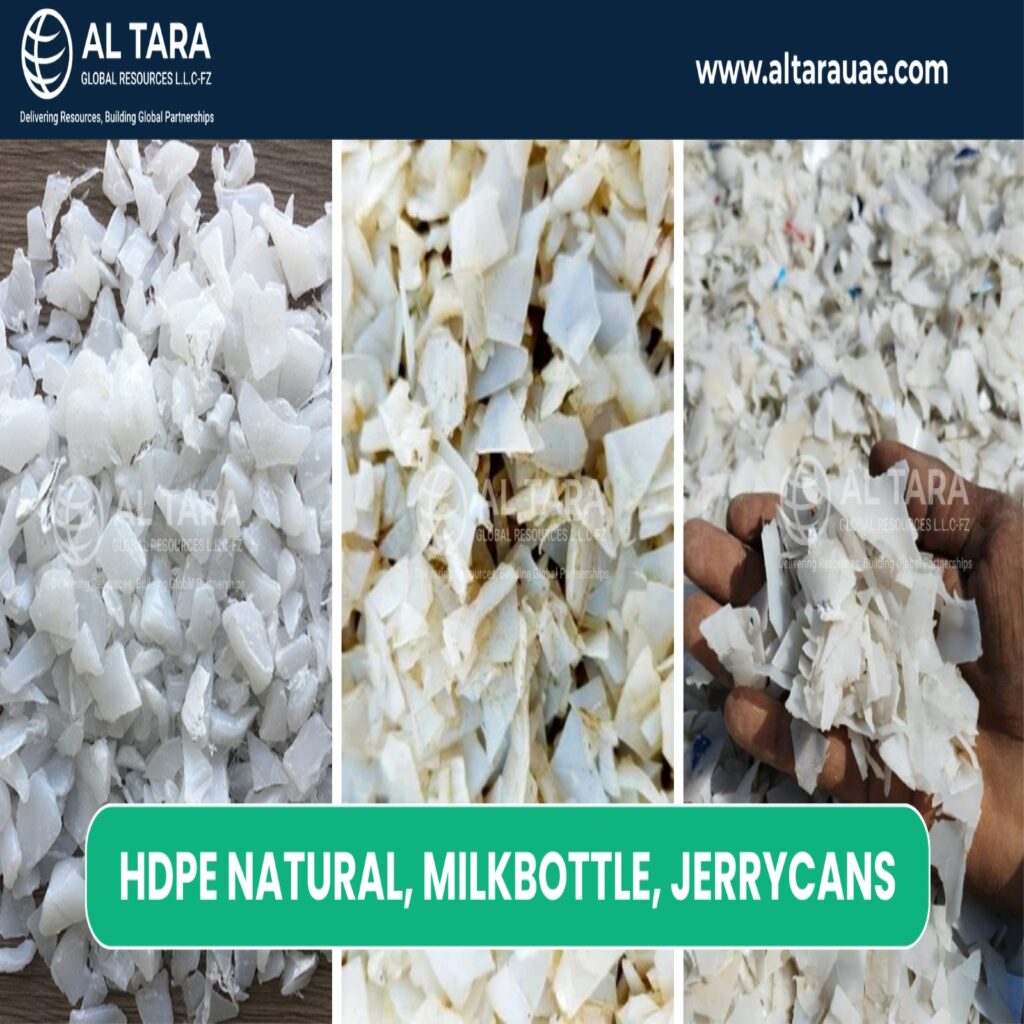
The demand for HDPE natural scrap in UAE is growing fast. Many industries now focus on plastic recycling in Dubai and Sharjah. This shift helps reduce waste and supports a circular economy.
Manufacturers use HDPE (High-Density Polyethylene) to produce strong and durable plastics. They commonly make milk bottles and jerrycans from HDPE. Recycling companies easily recycle these products. Therefore, the recycling market highly values these materials.
Firstly, recycling companies collect used HDPE milk bottles and jerrycans. These items come from households, factories, and commercial sectors. Then, the plastic is cleaned and sorted carefully. This step removes dirt and contaminants.
After that, the material goes through grinding machines. Consequently the machines convert the plastic into HDPE regrind flakes. These flakes become raw material for new plastic products.
In fact in the UAE, Dubai, and Sharjah, many manufacturers use HDPE natural regrind. They produce pipes, containers, packaging materials, and industrial parts. As a result, recycling helps reduce the need for virgin plastic.
Moreover, natural plastic recycling saves energy and lowers environmental impact. It also helps companies meet sustainability goals. Because of this, the demand for HDPE natural scrap and regrind continues to increase across the region.
Another advantage is cost efficiency. Recycled HDPE is often more affordable than virgin plastic. Therefore, many businesses prefer recycled materials for production.
Conclusion
In conclusion, HDPE natural scrap recycling in the UAE plays an important role in the plastic industry. Recycling milk bottles and jerrycans creates useful regrind material. At the same time, it supports environmental protection and resource conservation.
As recycling technology improves, the HDPE recycling market in Dubai and Sharjah will continue to grow.
FAQs
1. What is HDPE natural scrap?
Recyclers collect it from used milk bottles and jerrycans.
2. How do recyclers process HDPE natural scrap?
They clean, sort, and grind it into reusable flakes.
3. What do manufacturers make from HDPE regrind?
They make pipes, containers, packaging, and industrial parts.
4. Why do companies use recycled HDPE?
They reduce costs and support sustainability.
5. Why is HDPE natural scrap recycling important?
It reduces waste, conserves resources, and supports a circular economy.