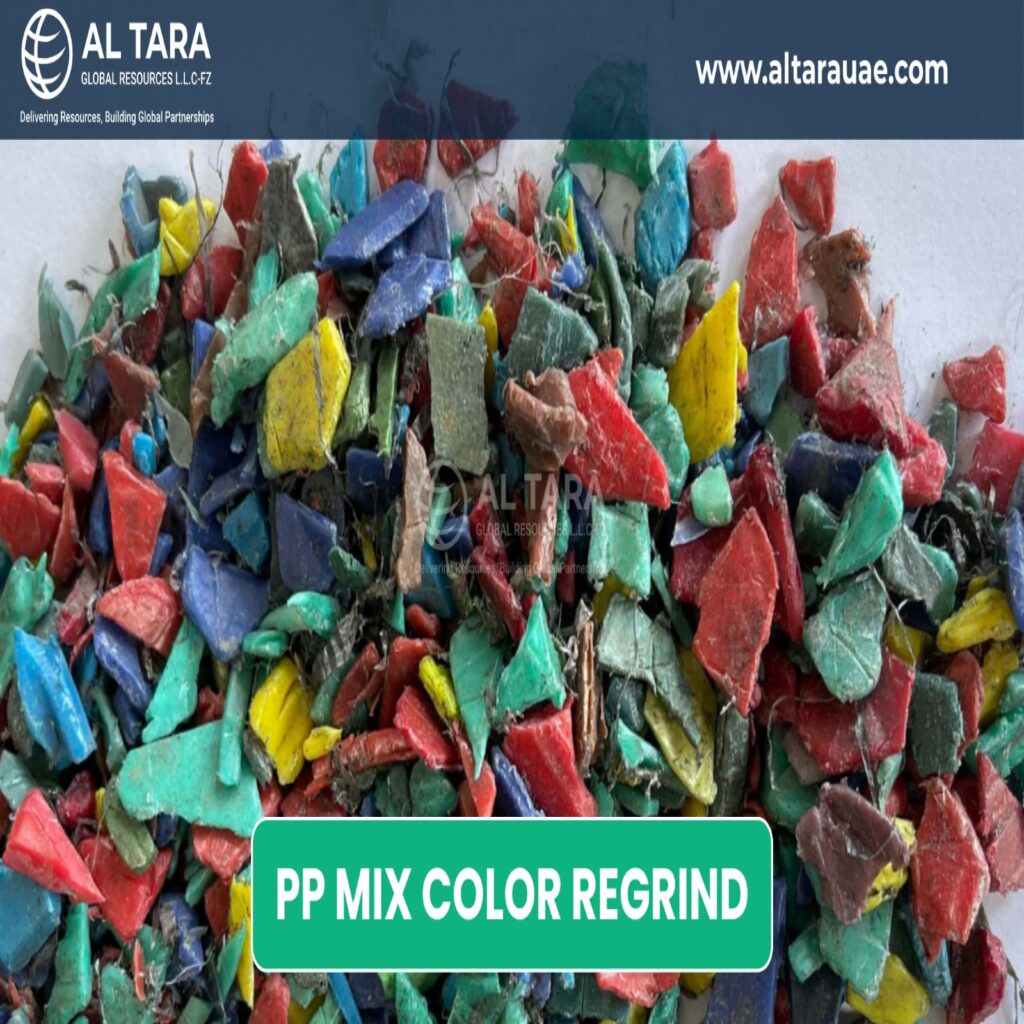
PP mixed colour regrind is gaining strong demand in Dubai, Sharjah, and across the UAE. Many industries generate large amounts of polypropylene scrap every day. Therefore, recycling this scrap has become essential for cost control and sustainability.
First, recyclers collect mixed colour polypropylene scrap from factories and commercial units. Then, they sort the material carefully. After that, they remove dust, metal, and impurities. Next, advanced machines process the material into PP grinding scrap. This step creates uniform flakes ready for reuse.
PP mixed colour regrind offers strong value. It costs less than virgin UAE polypropylene material. As a result, manufacturers reduce production expenses. Moreover, this scrap works well for non-transparent products such as crates, pallets, buckets, and automotive parts.
In Dubai and Sharjah, recycling companies maintain steady supply. They use modern grinding systems to improve consistency. Consequently, buyers receive reliable material for injection molding and extrusion processes. Quality control also plays a key role in maintaining market trust.
Price depends on supply levels and demand in the UAE market. However, mixed colour regrind remains a cost-effective option for many industries. Furthermore, companies prefer recycled scrap to support environmental goals. This approach reduces landfill waste and saves natural resources.
Looking at the future, PP mixed colour regrind demand is expected to grow. Industrial expansion in Dubai and Sharjah will increase scrap generation. At the same time, sustainability regulations in the UAE will encourage higher recycling rates.
Conclusion
In conclusion, PP mixed colour regrind provides economic and environmental benefits. With strong recycling systems and growing industrial demand, the UAE market shows clear signs of long-term growth.
FAQs – PP Mixed Colour Regrind
1. What is PP mixed colour regrind?
It is recycled polypropylene made from mixed-colour plastic scrap.
2. How do recyclers produce PP mixed colour regrind?
First, they sort and clean the scrap. Then, they grind it into reusable flakes.
3. Where do manufacturers use PP mixed colour regrind?
Commonly, they use it in crates, pallets, buckets, automotive parts, and other non-transparent products.
4. Why do manufacturers choose PP mixed colour regrind?
As a result, they reduce production costs and support sustainable manufacturing.
5. Why is demand for PP mixed colour regrind increasing in the UAE?
Moreover, industrial growth and recycling initiatives continue to drive market demand.