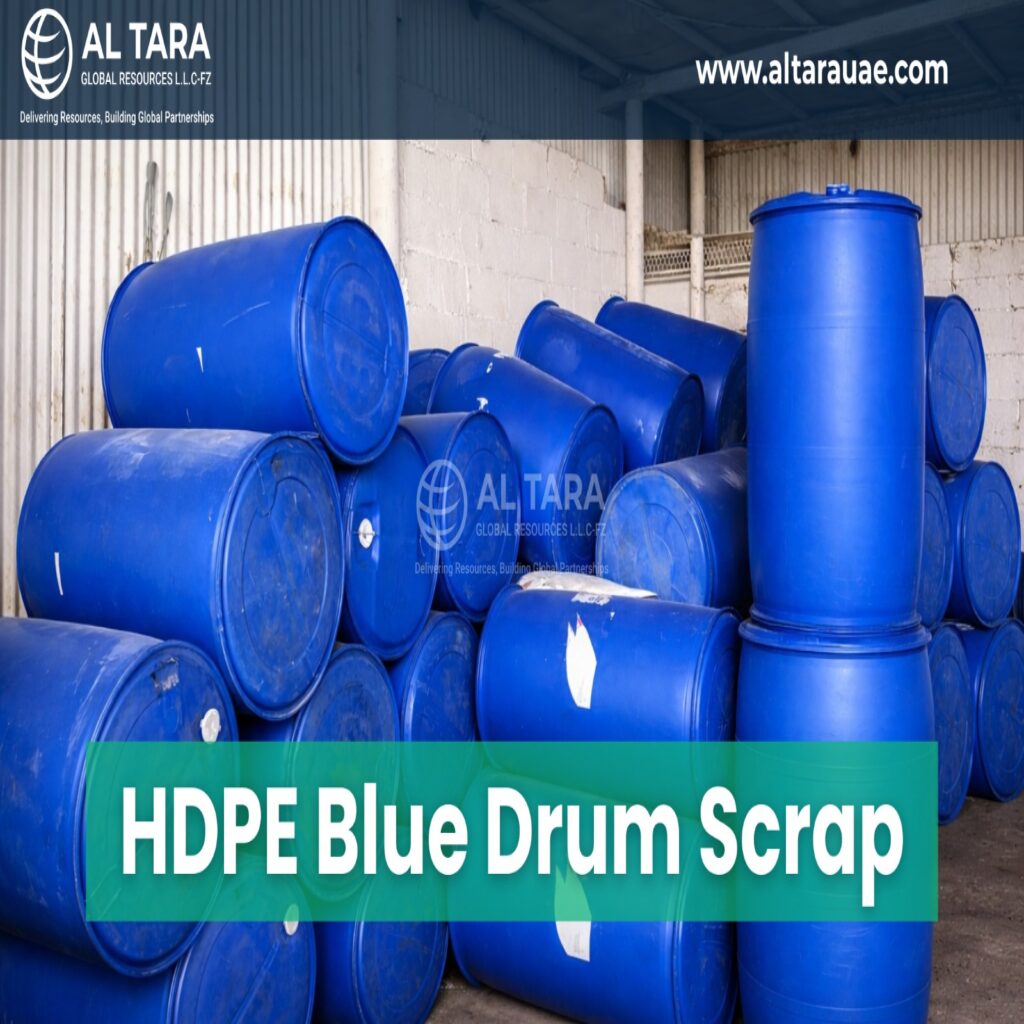
HDPE Blue Drum Scrap comes from industrial packaging used in chemicals, food additives, lubricants, and logistics across the UAE. Because these drums are made from high-density polyethylene (HDPE), they are thick and strong. As a result, HDPE blue drum scrap offers high material yield and reliable performance during recycling.
First, suppliers collect the drums from warehouses, factories, and recycling yards. Then, they separate drum-grade HDPE from mixed plastic waste. This step is important because proper segregation reduces contamination. In addition, clean sorting improves processing efficiency. Therefore, verified suppliers play a key role in maintaining consistent quality.
Next, recyclers inspect each batch carefully. They remove labels, caps, metal rings, and any foreign plastics. After that, workers shred and crush the drums into flakes or regrind. Some buyers prefer unwashed HDPE blue drum scrap. This allows them to wash and filter the material in-house. As a result, they can control quality based on their production needs.
Furthermore, processors convert HDPE drum flakes into granules. Manufacturers use these granules to produce crates, pallets, pipe fittings, rigid containers, and industrial bins. For example, heavy-duty storage products require strong recycled material. Because drum-grade HDPE is thicker than light packaging scrap, it provides better strength and durability.
Finally, a steady supply of HDPE blue drum scrap depends on clear grading and proper sorting. Without these steps, output quality may vary. Therefore, reliable UAE suppliers ensure stable production, reduced waste, and better manufacturing results.