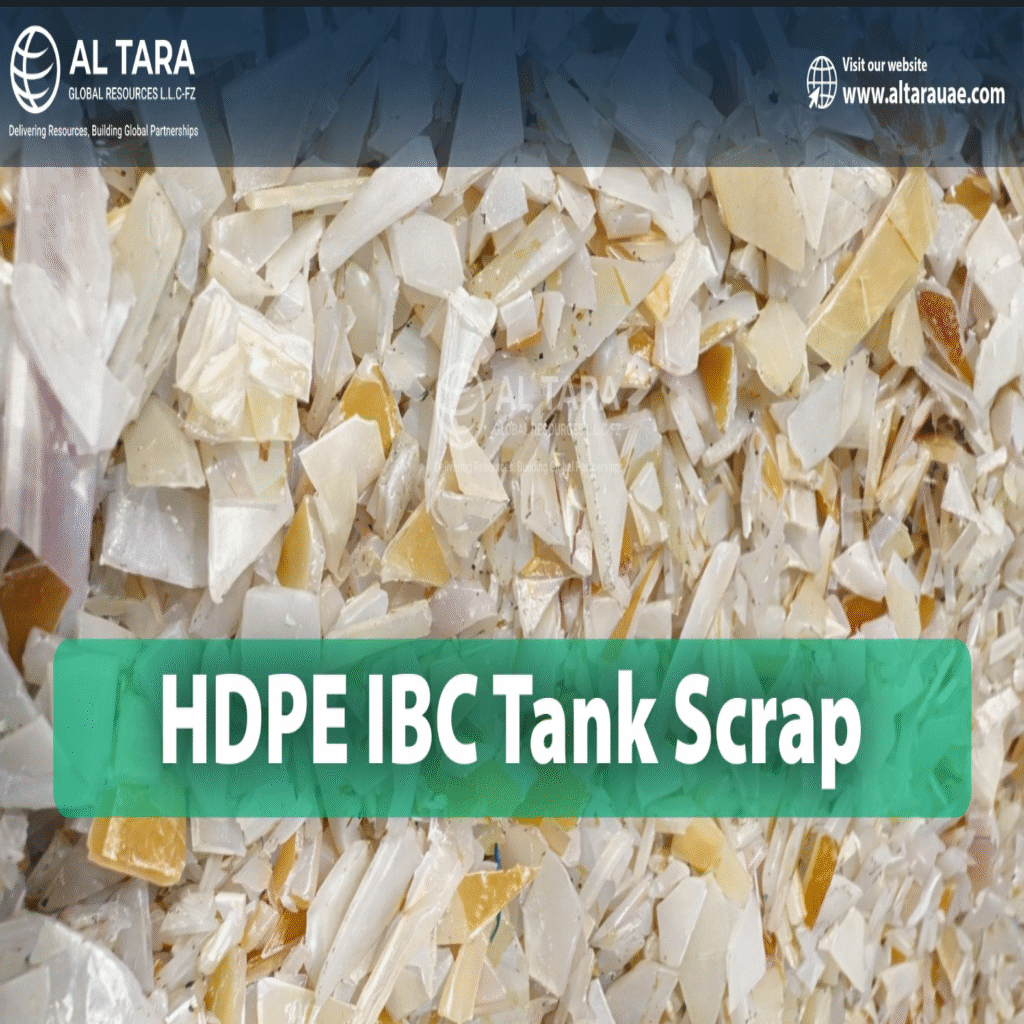
HDPE IBC tank scrap comes from the HDPE tank inside an Intermediate Bulk Container (IBC). First, recyclers remove the outer metal cage and pallet base. Then they separate the HDPE tank. The result is a thick and rigid plastic material. Because IBC tanks store industrial liquids, manufacturers design them for strength and durability. As a result, recycled HDPE from IBC tanks offers high material value and strong performance.
Industries such as factories, chemical plants, warehouses, and logistics yards generate IBC scrap. Recycling centers collect these containers and dismantle them step by step. After that, workers separate the HDPE tank from the steel cage and fittings. This careful dismantling protects material quality and prevents contamination.
Next, recyclers inspect each tank. They remove residues, labels, caps, valves, and any non-HDPE parts. In addition, they check for chemical traces or odor. Proper cleaning matters because stored liquids can affect quality. Therefore, teams sort the material by color and grade, such as natural, mixed color, or light industrial grade. At the same time, they remove metal pieces and foreign plastics to keep purity high.
Once sorted, processors crush the tanks into flakes or regrind. Buyers choose the format based on their production needs. For example, many buyers prefer unwashed regrind. This option allows them to control washing, moisture levels, and filtration in-house. However, other buyers request washed flakes for direct pelletizing or granule production.
Manufacturers use recycled HDPE IBC scrap to produce industrial packaging, blow-molded containers, pallets, crates, drums, and other rigid plastic products. Because the material has consistent density and strength, it performs well in heavy-duty applications.
In summary, quality IBC scrap depends on proper dismantling, sorting, and contamination control. Therefore, bulk buyers focus on suppliers who maintain steady standards and consistent processing methods.