
Introduction
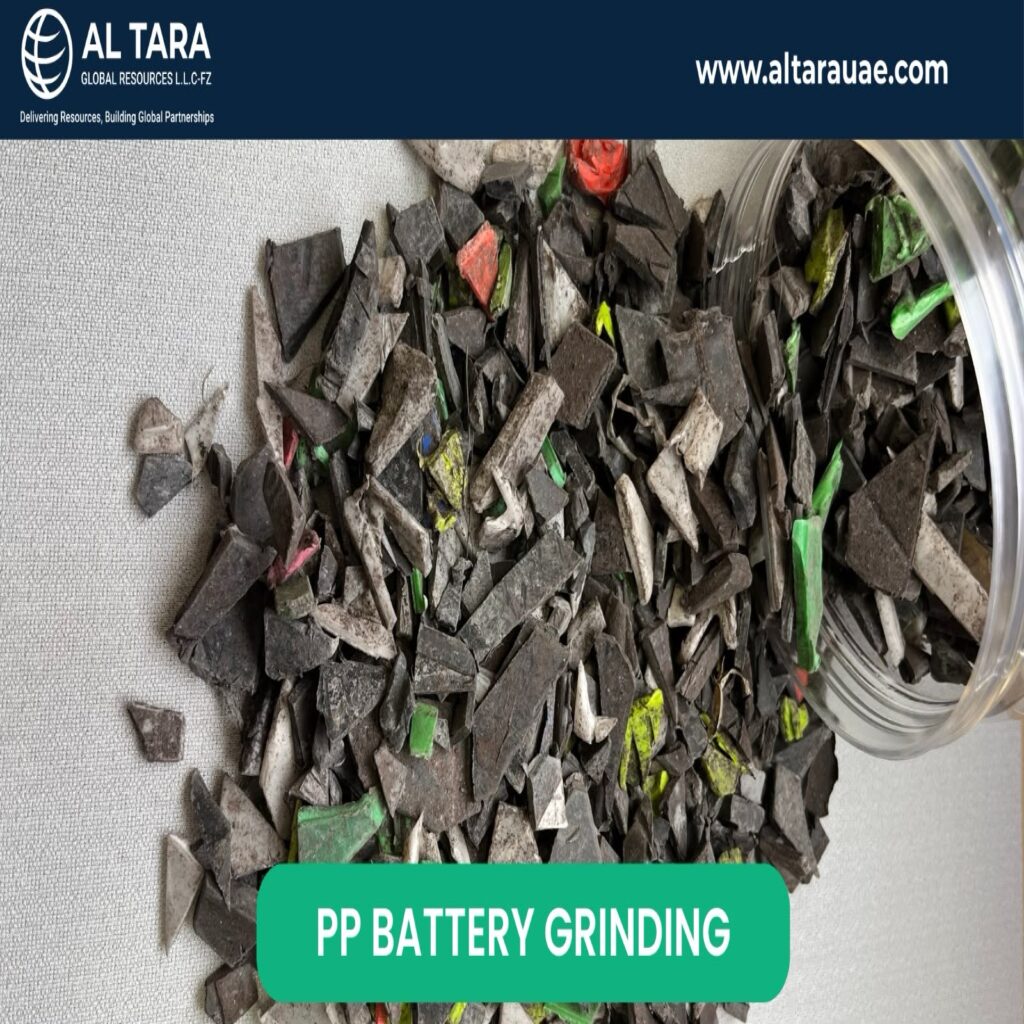
PPCP scrap (Polypropylene Co-Polymer) comes from a tough and versatile plastic widely used across many industries. Moreover, recyclers process PPCP scrap into Battery Unwashed Grinding Scrap using discarded battery housings and automotive plastic parts. As a result, manufacturers increasingly choose this recycled material as a cost-effective and eco-friendly raw material. By using PPCP scrap, industries reduce production costs while supporting recycling and advancing their sustainability goals.
What is PPCP Battery Unwashed Grinding Scrap?
- Specifically, it is made from grinding old battery cases, trays, and related plastic components.
- Additionally, it comes in granule or regrind form that can be remolded into new products.
- Called unwashed because it may still contain residues like dust, acid, or oil.
Consequently, this material serves as a secondary raw material that can replace part of virgin polypropylene in many applications.
Key Features of PPCP Scrap
- Strength and durability – excellent resistance to impact and stress.
- Appearance – mostly grey or black, depending on the source.
- Raw form – needs washing and pelletizing for high-quality use.
- Flexible blending – can be mixed with virgin PP to balance cost and performance.
Applications & Uses of PPCP scrap
PPCP Battery Scrap is widely reused in:
- Automotive parts – dashboards, bumpers, battery cases.
- Electrical products – appliance housings and covers.
- Household items – bins, containers, furniture pieces.
- Industrial goods – pallets, crates, and heavy-duty packaging.
Consequently, manufacturers use this material as a secondary raw material to replace a portion of virgin polypropylene in many applications
Processing Methods Before Use
To make the scrap ready for manufacturing, processors often:
- Washing & Cleaning – removes oil, acid, and other residues.
- Drying – reduces moisture for better molding quality.
- Pelletizing – converts regrind into uniform pellets.
- Blending – mixes with virgin polypropylene to maintain strength and color.
These steps improve quality and ensure better results in molding or extrusion.
Benefits of Using PPCP Scrap
- Lower cost – compared to virgin plastic.
- Eco-friendly – supports recycling and reduces landfill waste.
- Readily available – strong supply from the recycling chain.
- Customizable – can be blended and modified with additives.
Challenges to Consider
- It may contain impurities such as dust, oil, or traces of acid.
- Moreover, the source and the grinding process directly determine its quality.
- Manufacturers must process the material properly before using it in sensitive applications.
Accordingly, manufacturers should purchase only from trusted suppliers who perform quality checks.
Quality Checks to Ensure Good PPCP Scrap
Before buying, request the following:
- Melt Flow Index (MFI) – shows how the material flows in molding.
- Ash Content – measures impurities.
- Moisture Level – should be low to avoid defects.
- Visual Inspection – to check for metal pieces or mixed plastics.
These tests help confirm that the scrap is safe and suitable for reuse.
Why Industries Prefer PPCP Scrap
- Steady demand in molding and reprocessing industries.
- Moreover, it reduces material costs compared to virgin PP.
- Sustainability benefits – supports recycling and reduces waste.
- Contribution to the circular economy – helps industries meet global eco goals.
Market Outlook
- Growing demand across Asia, Middle East, and Southeast Asia.
- Export and import opportunities for global buyers.
- Increasing importance in the worldwide shift to circular economy plastics.
Role in Environmental Sustainability
Using PPCP scrap supports:
- Less plastic waste in landfills.
- Lower carbon footprint by reducing virgin plastic production.
- Compliance with green policies and sustainability targets.
For many manufacturers, switching to recycled materials is not just a cost choice but also a step toward eco-responsibility.
Export & Import Potential
PPCP scrap is widely traded in international markets. Buyers and sellers benefit from:
- Large volumes available from recycling centers.
- Standardized packaging in jumbo bags or containers.
- Competitive global pricing compared to virgin plastic.
This makes it attractive for both local use and cross-border trading.
How to Choose the Right Supplier
When buying PPCP scrap, follow these steps to make sure you get genuine and high-quality material:
- Check certifications to make sure the supplier follows recycling rules and safety standards.
- Furthermore, request lab reports, including MFI, ash content, and moisture level, to ensure the material meets quality standards.
- Verify packaging and shipping terms – Look for safe and standard packaging such as jumbo bags to avoid damage.
- Moreover, by comparing multiple suppliers and reviewing prices, delivery times, and consistency, you can get the best deal.
- Additionally, trusted platforms like ScrapC help buyers connect with real and verified suppliers, which reduces risks and ensures authentic material.
Therefore, by following these steps, manufacturers not only secure reliable suppliers but also ensure consistent production quality.
Buying Tips for Manufacturers
- Always start with a sample batch.
- Confirm the price per ton and delivery terms before bulk orders.
- Ask about washing or pelletizing options if you need cleaner material.
- Plan storage in a dry and safe area to protect quality.
Conclusion
Overall, PPCP Battery Unwashed Grinding Scrap is a low-cost, eco-friendly, and reliable material. It also helps manufacturers save money, support sustainability, and meet the growing demand for recycled plastics.
Manufacturers get the most benefit from PPCP scrap by selecting the right supplier and checking quality. Reliable suppliers and sourcing platforms such as AL TARA Global Resources (https://altarauae.com/), ScrapC (https://scrapc.com/), and Shine and Glow Group (https://shineandglowgroup.in/) simplify the purchasing process and ensure quality materials.
FAQs
1. What is PPCP battery unwashed grinding scrap?
In particular, this material is recycled polypropylene from old battery housings and is sold in granule form.
2. Can it be used directly in manufacturing?
It usually needs cleaning, drying, or pelletizing before molding.
3. What are the main uses?
Automotive parts, electrical housings, packaging, and household products.
4. Why is it cheaper than virgin plastic?
Because it comes from recycled sources, lowering production costs.
5. How can buyers ensure quality?
By requesting lab test reports and also working with reliable suppliers, manufacturers can ensure consistent quality.
Hi, this is a comment.
To get started with moderating, editing, and deleting comments, please visit the Comments screen in the dashboard.
Commenter avatars come from Gravatar.